
Vessels, engines and deck equipment run on hours and carry survey and certification obligations. Gearbox schedules service on running hours and holds the certificates, with their expiry dates, against the asset itself.

Engine hours in a logbook, survey certificates in a folder ashore, and the tender's outboard serviced whenever someone remembers. When the surveyor asks for evidence, the scramble starts. Gearbox keeps it on the vessel's own record, dated and attached.
The vessel, its engines, the tender, the crane on deck and the fire equipment in the locker can each be tracked as assets with their own schedules and histories, linked so the whole picture sits together. Service on running hours for the mains, dates for the survey items.
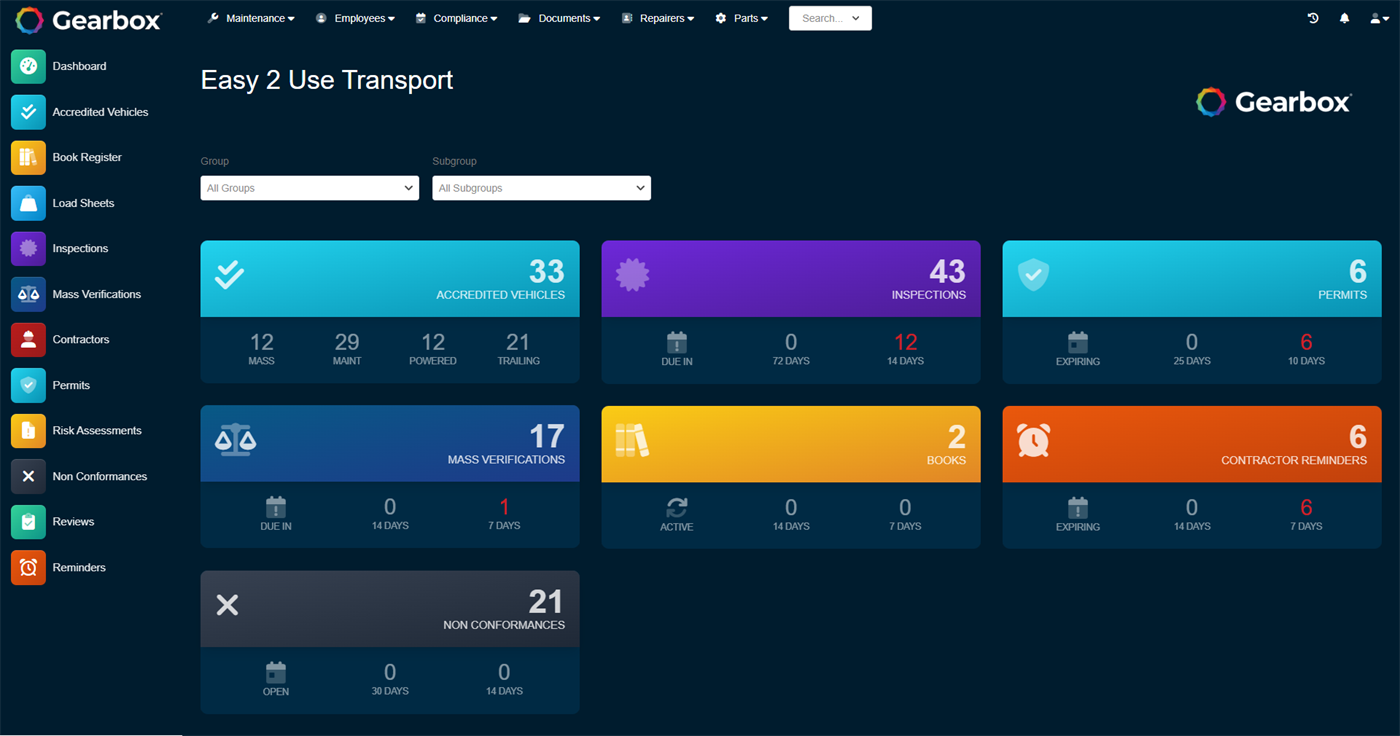
Certificates are attached to the asset with their expiry dates, inspections run on their own schedules with reminders, and the compliance dashboard shows what falls due in 7, 14 and 30 days. The surveyor's question becomes a search, not an excavation.
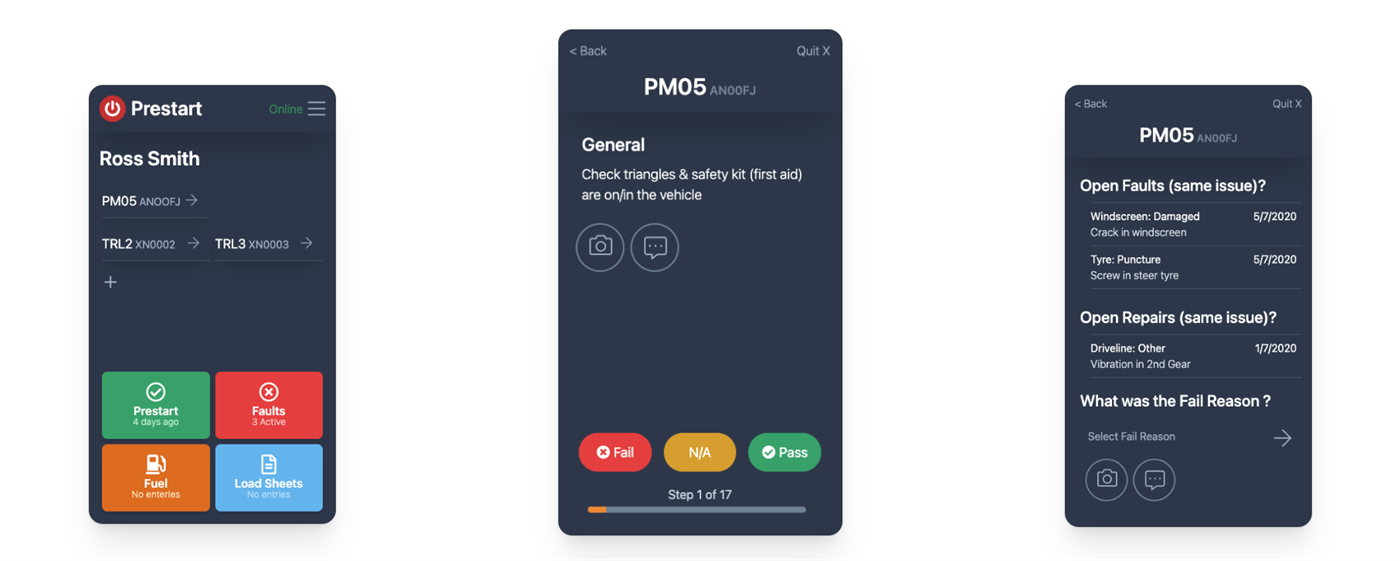
Pre-departure checks run in the Prestart app, one question at a time, and keep working with no signal. A failed critical item stands the vessel down, and the fault report with photos uploads when the boat is back in range.
Mains, gensets and hydraulics serviced on the hours they actually ran, with readings entered or fed from monitoring.
Survey, safety equipment and radio certificates attached with expiry dates and reminders.
Tickets, medicals and training per crew member, with one status showing who needs attention.
Checklists per vessel in the app, offline at sea, synced back at the dock.
Stock per location, filters and spares received by purchase order and counted at stocktake.
A fault logged aboard becomes a prioritized work order ashore, with photos attached.
Every answer below is drawn from the knowledge base our customers use, with a link to the full guide.
Browse the knowledge baseTime based inspections run separately from engine hour services. A vessel can carry several inspection types at once, each with its own due dates, all feeding its status light.
Read the guideThe app works offline, flags unsynced records, reminds the crew, and uploads automatically when it next opens. Nothing done at sea is lost to the dead zone.
Read the guideLatest and highest readings sit side by side, with their sources, so a mis-keyed hour meter or a genset that stopped reporting is visible before it distorts the schedule.
Read the guideTraining and medicals for the whole crew in one grid, colour coded, with the columns you choose. Who is current is a glance, not an audit.
Read the guidePPE and tools logged against the crew member holding them, extinguishers and first aid kits against the vessel carrying them.
Read the guideStart a free trial, which opens with sample data. If you want to go further, we set up a proof of concept on your own fleet at no extra cost.